Cannstatter Volksfest History & Traditions: why Stuttgart’s festival is more than beer tents
Cannstatter Volksfest began as an agricultural festival in 1818 and grew into one of Germany’s great folk festivals. Behind the beer tents, rides and lights are harvest symbols, Württemberg history, Swabian food culture, traditional clothing, parades, family customs and the famous Fruchtsäule that still reminds visitors where the festival came from.
More than a beer festival
The Wasen began with agriculture, recovery and public celebration
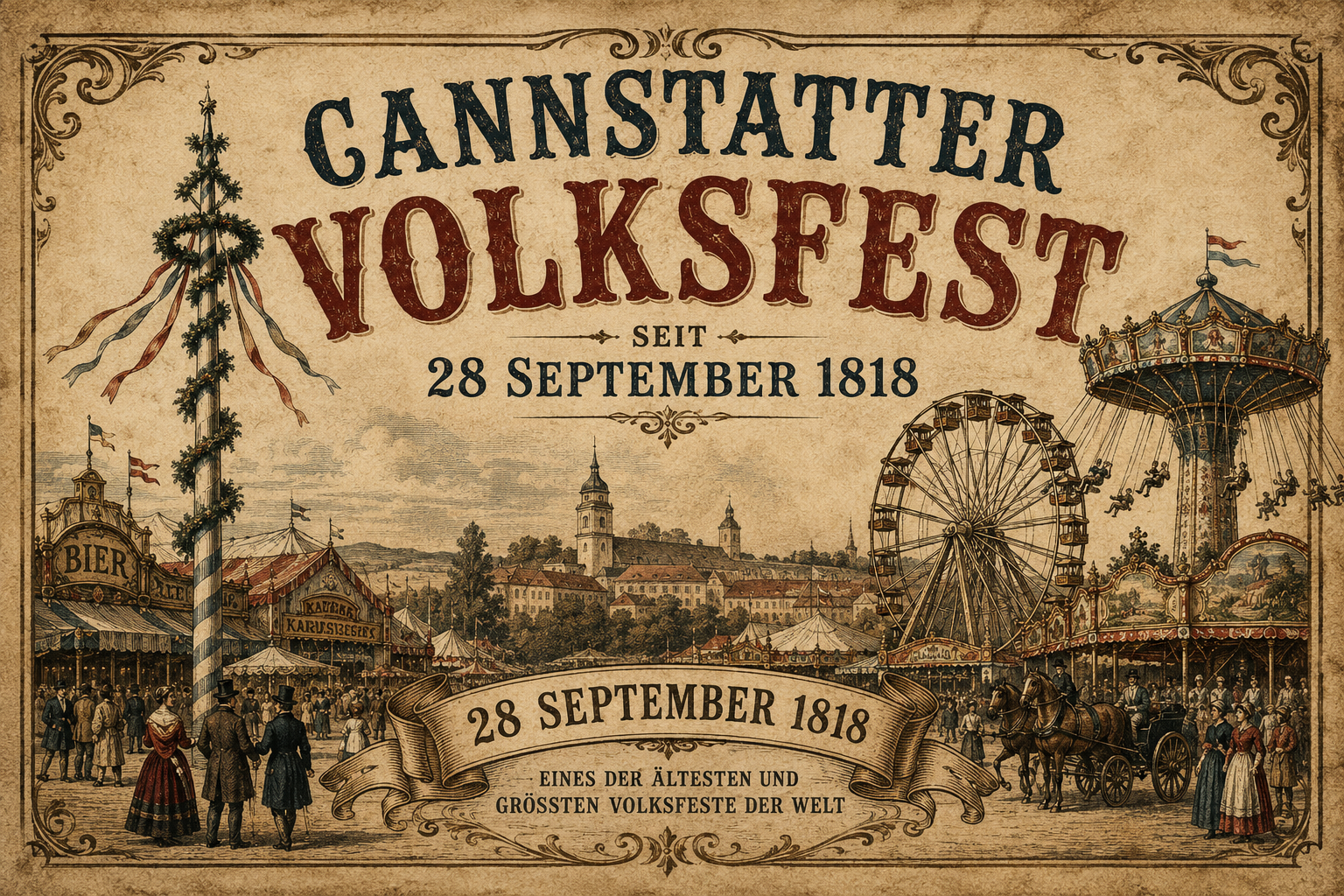
Cannstatter Volksfest is often described abroad as the Stuttgart Oktoberfest, but its identity is older and deeper than a simple beer comparison. The first festival was held on 28 September 1818, one day after King Wilhelm I’s birthday, as a large agricultural gathering on the Cannstatter Wasen.
The early festival included horse races and awards for livestock breeding. It was designed as a public celebration with agricultural purpose: a way to encourage farming, restore confidence and bring people together after difficult years for the region. That origin still matters. Even when today’s visitors come for beer tents, rides and food, the Wasen carries the memory of harvest, rural skill and local pride.
This is why the Fruchtsäule matters so much. The Fruit Column is not decoration for decoration’s sake. It is a harvest symbol, a reminder that Cannstatter Volksfest was born from the land, the agricultural year and the idea of renewal.
Visitor tip: Before entering a tent, look for the festival’s harvest symbolism. It changes how you understand the Wasen: not only as a party, but as a living folk tradition.
Timeline
Key moments in Cannstatter Volksfest history
The festival has changed enormously, but the central idea has remained the same: people gathering on the Wasen to celebrate, eat, meet, compete, remember and enjoy Stuttgart’s public festival culture.
The first Cannstatter Volksfest
A large agricultural festival was held at the Cannstatter Wasen with horse races and awards for agricultural achievement. This became the foundation of the modern Volksfest.
Growth beyond agriculture
The festival expanded from agricultural roots into a broader public folk festival with entertainment, food, gatherings, processions and increasing popular appeal.
Parade tradition develops
Festive procession culture became part of the Volksfest identity, connecting town, region, costume, music and rural symbolism.
The Wasen becomes a major festival ground
Beer tents, rides, stalls and large-scale visitor infrastructure shaped the modern experience, while the Fruchtsäule and agricultural memory continued to anchor the identity.
A huge folk festival with local roots
Cannstatter Volksfest now blends beer tent culture, fairground rides, Swabian food, family visits, traditional clothing, music and Stuttgart tourism.

The Fruchtsäule
The Fruit Column is the symbol visitors should not miss
The Fruchtsäule, or Fruit Column, is the most important visual symbol of Cannstatter Volksfest. It connects the modern festival to its harvest origins and reminds visitors that the Wasen began as an agricultural celebration.
Covered and decorated with fruits, grains and harvest motifs, the column is a powerful contrast to the bright rides and busy tents around it. It tells the story of gratitude, farming, seasonal abundance and Württemberg identity. Many visitors photograph the beer tents and rides first, but the Fruchtsäule is the symbol that explains why the festival exists.
For first-time visitors, it is worth making a point of finding the Fruit Column early in the visit. It works as a visual anchor, a meeting reference and a reminder that the Wasen is not simply copied from Munich or any other festival.
Traditions visitors notice
What makes Cannstatter Volksfest feel traditional
Tradition at the Wasen is not only one ceremony. It appears in small details: what people wear, what they eat, how tents are organised, how families visit and how Stuttgart treats the festival as part of its annual rhythm.
Traditional clothing
Dirndl and lederhosen are common, especially in beer tents and for groups. Visitors can wear them, but they should choose good fit, comfortable shoes and respectful styling.
Beer tent music
Music moves from traditional brass and folk-inspired tunes into lively party songs as the day progresses. The mood changes by tent and time.
Swabian food
Göckele, Kässpätzle, Schupfnudeln, Maultaschen, pretzels and sausages connect the festival to regional food culture.
Family visits
The Wasen is not only for adults. Daytime family visits, rides and sweets are part of the folk festival character.
Parades and processions
Costume, music, farming symbols and regional clubs keep the festival connected to Württemberg identity.
Fairground culture
Rides, games, lights and stalls turn the Wasen into a temporary city of entertainment, not only a beer event.
Tradition table
How to understand key Wasen traditions
This table helps visitors recognise what they are seeing and why it matters.
| Tradition | What visitors see | What it means | How to experience it well |
|---|---|---|---|
| Fruchtsäule | A decorated harvest column on the Wasen. | Symbol of agricultural roots, harvest gratitude and festival identity. | Find it early and use it as a visual anchor. |
| Beer tents | Large halls with music, food, beer and long tables. | Modern social heart of the festival, built around hospitality and group celebration. | Reserve for peak times and arrive before the rush. |
| Traditional dress | Dirndl, lederhosen, checked shirts, blouses and jackets. | Regional festival style and group identity, especially inside tents. | Wear it neatly and comfortably; avoid costume-shop caricatures. |
| Food culture | Roast chicken, Swabian dishes, pretzels, sweets and fairground snacks. | Links the festival to local appetite, season and social eating. | Eat savoury food before a long tent session. |
| Family fairground | Rides, children’s attractions, sweets and daylight visits. | Shows the Volksfest as a people’s festival, not only adult nightlife. | Visit earlier and leave before late crowds. |
| Processions | Music, costumes, clubs, animals or historic references depending on programme. | Connects Stuttgart, Württemberg, agriculture and civic pride. | Check the calendar and arrive early for a good viewing point. |
Dress tradition
Dirndl and lederhosen are welcome, but not compulsory
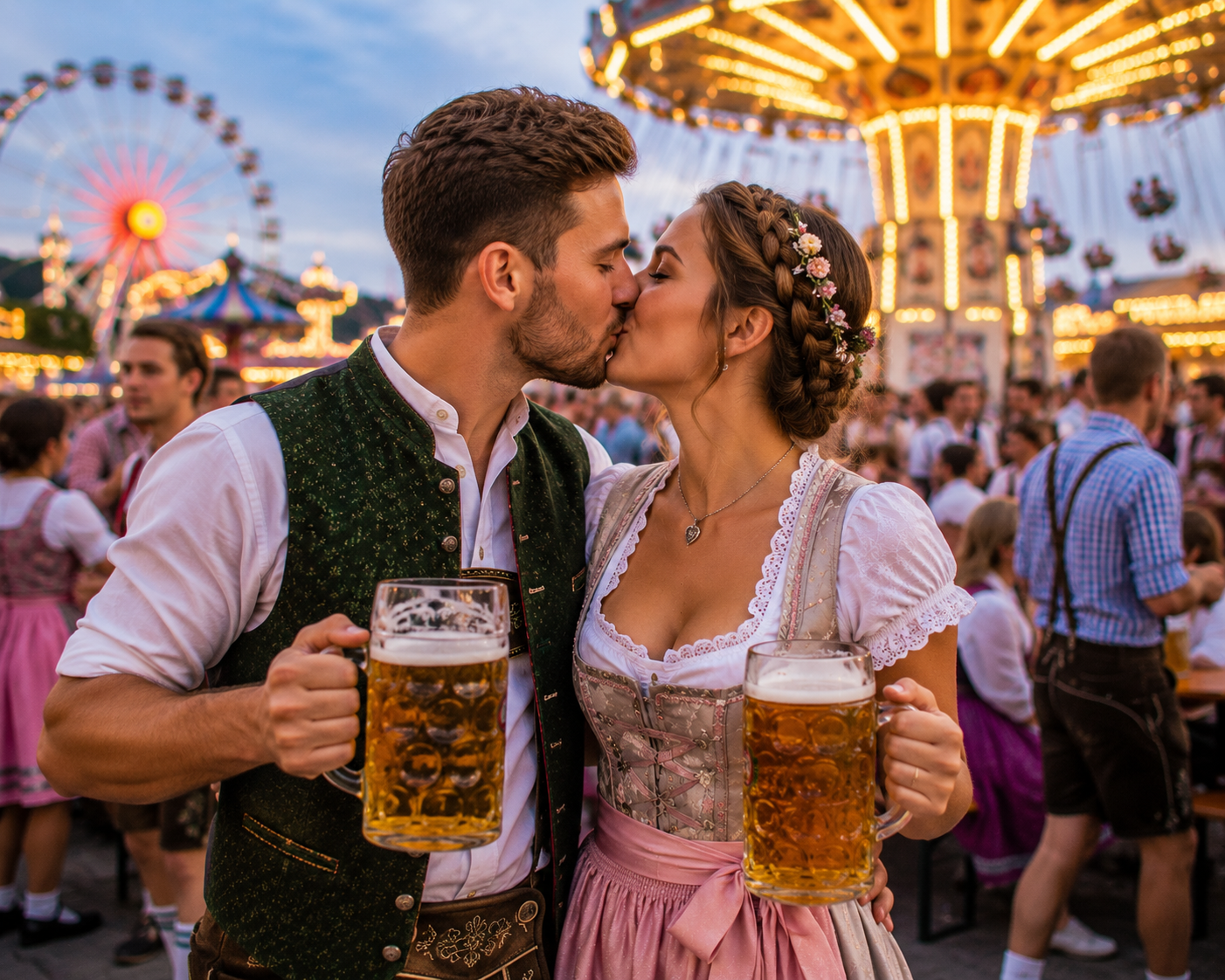
Traditional clothing is one of the most visible Wasen customs. Many locals and visitors wear dirndl, lederhosen, checked shirts, waistcoats, jackets and festival shoes, especially for beer tent evenings.
Visitors should understand that traditional clothing is not a uniform required for entry. You can enjoy Cannstatter Volksfest in normal smart-casual clothing. If you do wear traditional dress, comfort matters. The Wasen means walking, standing, sitting at benches, climbing steps, using public transport and moving through crowds.
Good traditional dress feels festive but practical. Bad traditional dress looks like a costume and becomes uncomfortable after one hour. Choose quality, fit and shoes over novelty.
Food and drink heritage
Wasen food carries Swabian identity
Food at Cannstatter Volksfest is hearty because the festival comes from agricultural and folk roots. It is designed for long days, cool autumn evenings, group tables and public celebration.
Göckele is the classic roast chicken of the beer tent. Kässpätzle brings Swabian comfort food to the table. Schupfnudeln and Maultaschen connect visitors to regional cooking beyond generic festival snacks. Pretzels, sausages, sweets and roasted almonds create the fairground walking experience.
Beer is important, but it should not erase the food culture. A visitor who eats well understands more of the Wasen than a visitor who only drinks quickly. The best beer tent evenings are built around food, music and conversation as much as the Maß.
Food tradition tip: Try at least one Swabian dish during the trip. It makes the festival feel local rather than interchangeable.
Modern festival culture
How the old festival became today’s Wasen
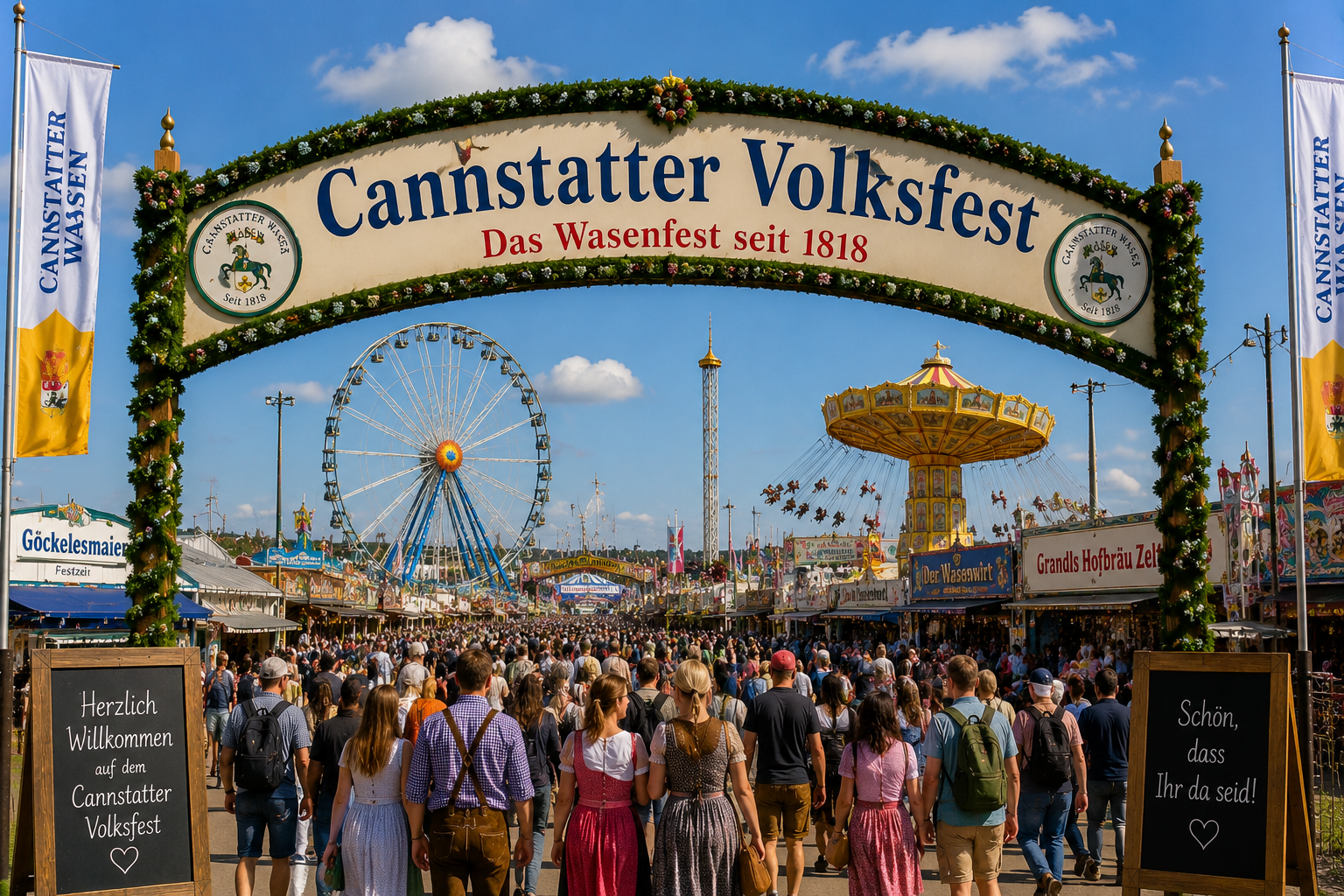
Modern Cannstatter Volksfest is a blend of history and entertainment. Visitors come for beer tents, rides, music, food, photos, family afternoons, group nights and Stuttgart travel. That variety is exactly what makes it a Volksfest.
The beer tents are the social centre for many adults, but rides and fairground stalls matter just as much. Families visit earlier. Friends meet for evening music. Travellers combine the festival with Stuttgart sightseeing. Locals return because the Wasen is part of the annual rhythm of the city.
The festival has survived because it has changed without losing its symbolic centre. The Fruchtsäule still points back to harvest, even while modern rides tower nearby.
Visitor etiquette
How to enjoy the traditions respectfully
Visitors do not need to be experts in Württemberg history to enjoy the Wasen, but a little awareness makes the experience better.
Do not call it only Oktoberfest
Many travellers use Stuttgart Oktoberfest as a search phrase, but the local name and identity are Cannstatter Volksfest and Cannstatter Wasen.
Dress with respect
If wearing dirndl or lederhosen, choose neat, practical clothing rather than exaggerated costume styling.
Eat local dishes
Trying Swabian food is one of the easiest ways to respect the festival’s regional character.
Understand family timing
The Wasen belongs to families too. Daytime is not a waiting room for adult nightlife; it is a core part of the festival.
Respect tent staff
Beer tents run on pressure, timing and capacity. Follow entrance rules and reservation conditions.
Notice the symbols
Look for the Fruchtsäule and harvest motifs. They explain the festival better than any single beer tent.
See the Wasen as Stuttgart sees it
Cannstatter Volksfest is a harvest-born folk festival that became a great modern celebration. Enjoy the beer tents and rides, but take time to notice the Fruchtsäule, Swabian food, traditional dress and local pride behind the lights.
History FAQ
Cannstatter Volksfest history and traditions FAQ
When did Cannstatter Volksfest begin?
The first Cannstatter Volksfest was held on 28 September 1818 at the Cannstatter Wasen in Stuttgart.
Who founded Cannstatter Volksfest?
The festival was initiated under King Wilhelm I of Württemberg and Queen Katharina as an agricultural and public celebration.
What is the Fruchtsäule?
The Fruchtsäule, or Fruit Column, is the harvest symbol of Cannstatter Volksfest and recalls the festival’s agricultural origins.
Is Cannstatter Volksfest the same as Oktoberfest?
No. International visitors sometimes call it Stuttgart Oktoberfest, but its proper identity is Cannstatter Volksfest, held at Cannstatter Wasen in Stuttgart.
Do visitors need to wear traditional clothing?
No. Dirndl and lederhosen are common and welcome, but they are not required. Comfortable, respectful clothing is the best choice.
What traditions should first-time visitors notice?
Look for the Fruchtsäule, Swabian food, traditional clothing, beer tent music, fairground rides and any parade or procession events during your visit.